The Eight Limbs of Yoga: Patanjali's Path Beyond the Mat
Postures are only one of yoga's eight limbs. Patanjali's Yoga Sutras lay out a complete path, from how you treat others to the deepest states of meditation.
Postures are only one of yoga's eight limbs. Patanjali's Yoga Sutras lay out a complete path, from how you treat others to the deepest states of meditation.
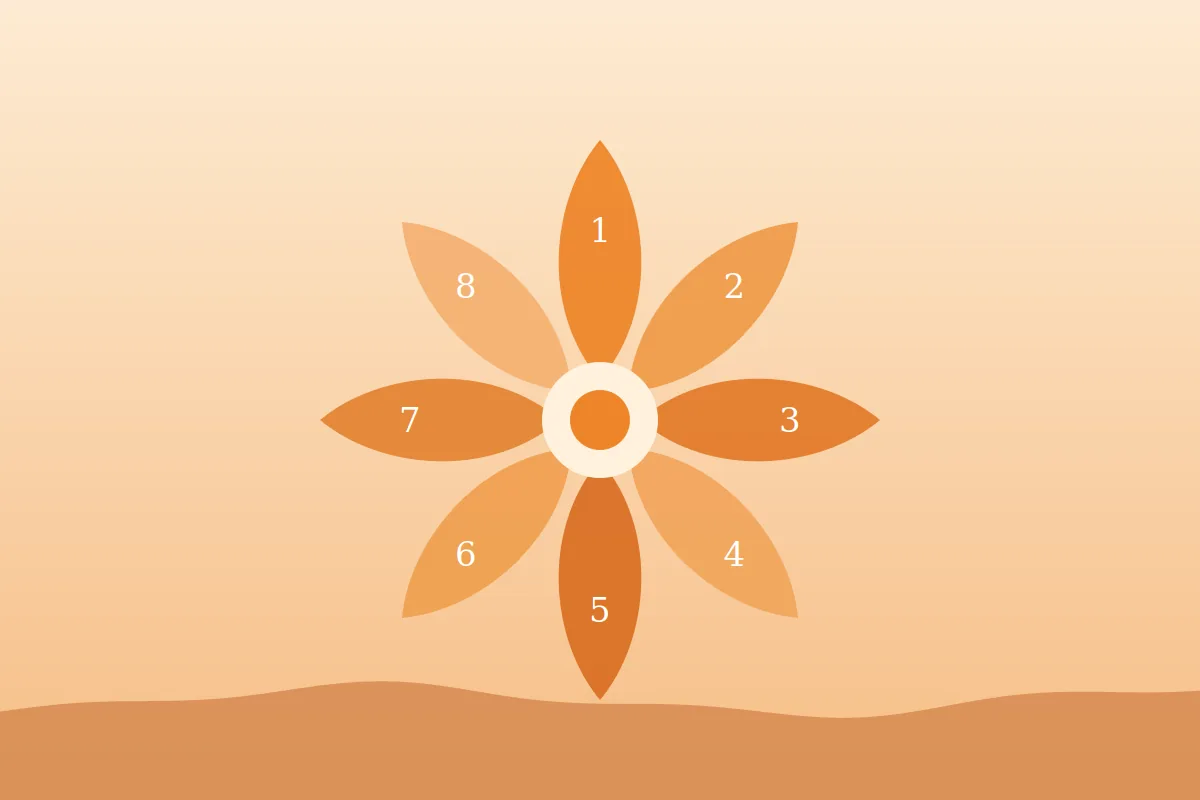
The eight limbs of yoga (ashtanga) are described in Patanjali's Yoga Sutras (2.29): yama (ethical restraints), niyama (personal observances), asana (posture), pranayama (breath regulation), pratyahara (withdrawal of the senses), dharana (concentration), dhyana (meditation) and samadhi (absorption). Together they form a step-by-step path to a still, clear mind.
The Yoga Sutras of Patanjali are the foundational text of classical yoga philosophy. Scholars date its compilation to somewhere between roughly 200 BCE and 400 CE. It is written in sutras - terse, thread-like aphorisms - organised into four chapters: Samadhi Pada, Sadhana Pada, Vibhuti Pada and Kaivalya Pada.
The second sutra gives the famous definition: yogas chitta vritti nirodhah - "yoga is the stilling of the fluctuations of the mind" (1.2). The eight limbs, introduced in sutra 2.29, are Patanjali's practical method for getting there. The word ashtanga simply means "eight limbs" (this is different from the modern Ashtanga Vinyasa style of asana).
Five ethical restraints (2.30), described as a "great vow" that applies in all circumstances:
In practice: choose one yama for a week. Practising satya, for example, might mean not exaggerating in conversation.
Five personal observances (2.32):
Tapas, svadhyaya and ishvara pranidhana together are called kriya yoga, the yoga of action (2.1).
Patanjali says remarkably little about posture: sthira sukham asanam - "the posture should be steady and comfortable" (2.46). Its original purpose was a seat for breathing and meditation. The many postures of modern yoga - like Surya Namaskar - developed largely through later Hatha yoga texts such as the Hatha Yoga Pradipika (15th century).
Once the posture is steady, pranayama follows: the regulation of the inhalation, exhalation and pause (2.49-2.51). The breath is the bridge between body and mind - when it becomes slow and even, the mind follows. Our beginner's guide to pranayama covers five safe techniques.
Pratyahara (2.54) is the withdrawal of the senses from their objects, like a tortoise drawing in its limbs. It is the hinge between the outer limbs (1-4) and the inner ones (6-8). In practice: a few minutes with the eyes closed, noticing sounds without chasing them, or eating one meal a day without screens.
Desha bandhas chittasya dharana - "concentration is binding the mind to one place" (3.1). The object might be the breath, a mantra, a candle flame or a point in the body. The mind wanders; dharana is the practice of bringing it back.
When concentration flows without interruption, it becomes dhyana (3.2). You cannot force dhyana; it arises naturally from steady dharana, like water flowing once the channel is clear. Our beginner's meditation guide shows how to begin.
In samadhi, the sense of a separate meditator falls away and only the object of meditation shines (3.3). Patanjali describes several levels of samadhi, culminating in kaivalya - the freedom of pure awareness. Dharana, dhyana and samadhi practised together on one object are called samyama (3.4).
The limbs are often taught as sequential steps, and there is logic to that: an ethical, disciplined life makes a calm mind possible, and a steady body and breath make meditation easier. But most teachers encourage practising several limbs together from the start - a little ethics, a little asana, a little breath, a little stillness each day. They support each other like the limbs of one body.
Yama, niyama, asana, pranayama, pratyahara, dharana, dhyana and samadhi, as listed by Patanjali in Yoga Sutra 2.29.
Patanjali is the traditional compiler of the Yoga Sutras. Little is known about him historically, and scholars date the text to somewhere between roughly 200 BCE and 400 CE.
Ashtanga means 'eight limbs' and originally refers to Patanjali's path. Ashtanga Vinyasa yoga is a modern, dynamic asana style popularised by K. Pattabhi Jois in Mysore that takes its name from it.
No. The yamas and niyamas are broadly ethical, and the practices of breath and concentration are open to anyone. Ishvara pranidhana can be interpreted as devotion to God or as surrender of the ego to something larger than oneself.
Health note: This article is for education only and is not a substitute for professional medical advice. Consult a qualified doctor or Ayurvedic practitioner before starting new practices, especially if you are pregnant, have a medical condition or take medication. Read our full disclaimer.
Learn Surya Namaskar step by step: all 12 poses with breathing cues, the 12 sun mantras, benefits, common mistakes and safety tips for beginners.
5 min read
Five safe pranayama techniques for beginners - three-part breath, Nadi Shodhana, Bhramari, Ujjayi and Sheetali - with step-by-step instructions, timings and precautions.
5 min read
Learn how to meditate in 10 minutes a day: posture, breath-counting, handling a busy mind, and a simple 30-day plan rooted in the yogic practice of dhyana.
5 min read
New articles on Ayurveda, yoga and spirituality, plus one seasonal practice. No spam; unsubscribe anytime.