Surya Namaskar: 12 Steps of the Sun Salutation with Breath and Mantras
The Sun Salutation is a complete practice in twelve movements. Here is each pose, when to breathe in and out, and the mantra that traditionally goes with it.
The Sun Salutation is a complete practice in twelve movements. Here is each pose, when to breathe in and out, and the mantra that traditionally goes with it.
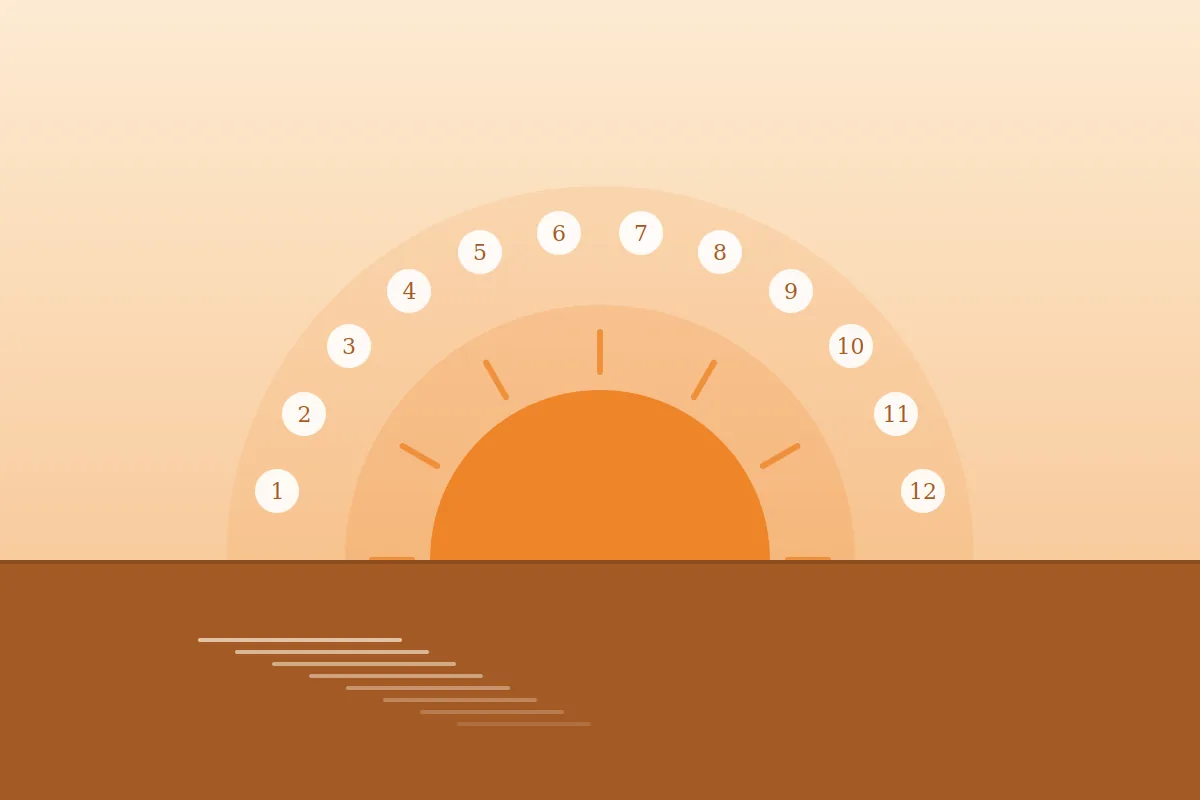
Surya Namaskar (Sun Salutation) is a flowing sequence of 12 yoga postures linked with the breath: Prayer, Raised Arms, Hand-to-Foot, Equestrian, Mountain, Eight-Limbed Salute, Cobra, Mountain, Equestrian, Hand-to-Foot, Raised Arms and Prayer. One full round is done twice - leading with the right leg, then the left. Beginners can start with 3-5 rounds, practised slowly on an empty stomach.
Surya means sun and namaskar means salutation. The sequence is a moving prayer to the sun as the source of life and a highly efficient warm-up that stretches the spine forwards and backwards, strengthens the arms and legs, and coordinates movement with breath. India's Ministry of Ayush includes it in its yoga promotion programmes, and mass Surya Namaskar events are held on Ratha Saptami, a festival dedicated to the Sun.
Several versions exist. The one below is the widely taught Hatha sequence (as in the Bihar School of Yoga). Some schools use a plank (Dandasana) at step 5 instead of Mountain pose; both are fine.
Stand tall with feet together, palms joined at the chest. Relax the shoulders. Breathe: exhale fully. Mantra: Om Mitraya Namah (to the friend of all).
Stretch the arms up and slightly back, lengthening from the heels to the fingertips. Keep the neck relaxed. Breathe: inhale. Mantra: Om Ravaye Namah (to the shining one).
Fold forward from the hips, bringing the hands beside the feet. Bend the knees as much as you need to - the priority is a long spine. Breathe: exhale. Mantra: Om Suryaya Namah (to the one who inspires activity).
Step the right leg far back, dropping the right knee to the floor. Keep the left foot between the hands and look forward. Breathe: inhale. Mantra: Om Bhanave Namah (to the one who illumines).
Step the left foot back to meet the right and lift the hips, forming an inverted V. Press the heels towards the floor. Breathe: exhale. Mantra: Om Khagaya Namah (to the one who moves through the sky).
Lower the knees, chest and chin to the floor, keeping the hips raised. Eight points touch the ground: two feet, two knees, two hands, chest and chin. Breathe: hold the breath out, or exhale. Mantra: Om Pushne Namah (to the giver of strength).
Slide forward and lift the chest, keeping the elbows slightly bent and close to the body and the shoulders away from the ears. Breathe: inhale. Mantra: Om Hiranyagarbhaya Namah (to the golden cosmic self).
Lift the hips back into the inverted V. Breathe: exhale. Mantra: Om Marichaye Namah (to the rays of the sun).
Step the right foot forward between the hands and lower the left knee. Breathe: inhale. Mantra: Om Adityaya Namah (to the son of Aditi).
Bring the left foot forward and fold. Breathe: exhale. Mantra: Om Savitre Namah (to the one who gives life).
Roll up with a long spine and stretch the arms overhead. Breathe: inhale. Mantra: Om Arkaya Namah (to the one worthy of praise).
Bring the palms back to the chest and pause. Breathe: exhale. Mantra: Om Bhaskaraya Namah (to the one who leads to enlightenment).
That is half a round. Repeat the sequence leading with the left leg in steps 4 and 9 to complete one full round.
You do not need to memorise the breath for each step. One rule covers almost all of it: inhale when you open the chest or bend back; exhale when you fold forward or compress the belly. Move slowly enough that each breath is smooth and unforced.
Surya Namaskar works the whole body in a few minutes: it moves the spine through flexion and extension, builds strength in the shoulders, arms and core, stretches the hamstrings and hip flexors, and trains the coordination of breath and movement. Small studies of regular practice have reported improvements in flexibility, strength and muscular endurance, and a faster pace raises heart rate into a moderate-intensity range. As with all yoga, benefits build with regular, patient practice.
Practise on an empty stomach (two to three hours after a meal). Avoid or modify Surya Namaskar if you have high blood pressure, heart disease, a hernia, or back, wrist or shoulder injuries, and during pregnancy unless guided by a qualified teacher. Stop if you feel pain or dizziness, and talk to your doctor before starting if you have a medical condition.
Pair your practice with a few minutes of pranayama and read about the eight limbs of yoga to understand where asana fits in the bigger picture.
Start with 3 to 5 slow rounds and add one or two each week. Twelve rounds daily is a traditional target once your body is comfortable with the sequence.
Early morning at sunrise, on an empty stomach, facing east if possible. Evening practice is also fine if you have not eaten for two to three hours.
Practised briskly for many rounds it raises the heart rate and burns energy like other moderate exercise, so it can support weight management alongside a sensible diet. It is not a stand-alone weight-loss solution.
Many teachers advise rest or gentle practice during menstruation, and pregnant women should practise only a modified version under a qualified prenatal yoga teacher with their doctor's approval.
Health note: This article is for education only and is not a substitute for professional medical advice. Consult a qualified doctor or Ayurvedic practitioner before starting new practices, especially if you are pregnant, have a medical condition or take medication. Read our full disclaimer.
Patanjali's eight limbs of yoga (Ashtanga) explained: yamas, niyamas, asana, pranayama, pratyahara, dharana, dhyana and samadhi, with practical ways to live each.
4 min read
Five safe pranayama techniques for beginners - three-part breath, Nadi Shodhana, Bhramari, Ujjayi and Sheetali - with step-by-step instructions, timings and precautions.
5 min read
Learn how to meditate in 10 minutes a day: posture, breath-counting, handling a busy mind, and a simple 30-day plan rooted in the yogic practice of dhyana.
5 min read
New articles on Ayurveda, yoga and spirituality, plus one seasonal practice. No spam; unsubscribe anytime.