The Six Tastes of Ayurveda and How to Eat for Every Season
Ayurveda does not count calories - it counts tastes. Learn the six rasas, what each does in the body, and how to shift your plate as the seasons turn.
Ayurveda does not count calories - it counts tastes. Learn the six rasas, what each does in the body, and how to shift your plate as the seasons turn.
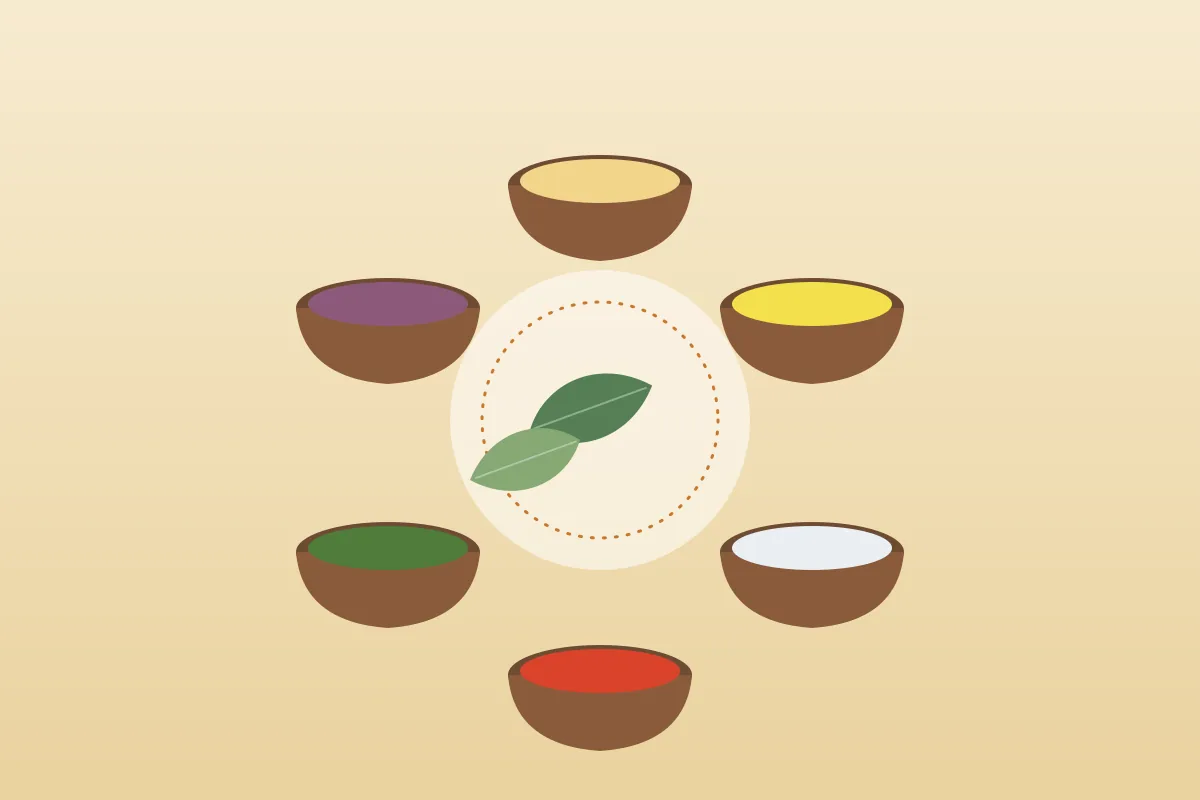
Ayurveda recognises six tastes (rasa): sweet, sour, salty, pungent, bitter and astringent. Each taste increases some doshas and calms others, so a balanced meal includes all six in proportions that suit your constitution and the season. Sweet, sour and salty calm Vata; sweet, bitter and astringent calm Pitta; pungent, bitter and astringent calm Kapha.
In Ayurveda, taste (rasa) is the first signal of what a food will do in the body. The Charaka Samhita lists six tastes, each formed from two of the five elements:
| Taste (rasa) | Elements | Examples | Effect on doshas |
|---|---|---|---|
| Sweet (madhura) | Earth + Water | Rice, wheat, milk, ghee, dates, sweet potato | Calms Vata & Pitta; increases Kapha |
| Sour (amla) | Earth + Fire | Lemon, yoghurt, tamarind, amla, fermented foods | Calms Vata; increases Pitta & Kapha |
| Salty (lavana) | Water + Fire | Rock salt, sea salt, seaweed | Calms Vata; increases Pitta & Kapha |
| Pungent (katu) | Fire + Air | Ginger, black pepper, chilli, garlic, mustard | Calms Kapha; increases Vata & Pitta |
| Bitter (tikta) | Air + Space | Bitter gourd, neem, fenugreek, leafy greens, turmeric | Calms Pitta & Kapha; increases Vata |
| Astringent (kashaya) | Air + Earth | Lentils, pomegranate, unripe banana, green tea | Calms Pitta & Kapha; increases Vata |
Shortcut: Vata likes sweet, sour and salty. Pitta likes sweet, bitter and astringent. Kapha likes pungent, bitter and astringent.
A traditional Indian thali is a working model of this idea: rice or roti (sweet), dal (astringent), a vegetable with spices (pungent), a sabzi of greens or bitter gourd (bitter), yoghurt or pickle (sour) and a little salt. Including every taste helps you feel satisfied, which the texts link to fewer cravings afterwards.
You can adjust the balance by constitution:
Ayurveda gives as much weight to how well you digest as to what you eat. Your digestive fire, agni, turns food into tissue; when it is weak, food leaves behind ama, a sticky residue linked to heaviness and disease. Simple ways to support agni:
The Indian calendar divides the year into six seasons (ritus) of about two months each. Ayurveda describes how each dosha accumulates, becomes aggravated and settles through the year, and adjusts diet accordingly. Dates below are approximate and vary by region.
Shishira - late winter (mid-January to mid-March). Cold and dry; appetite is strong. Eat nourishing, warm, unctuous food - ghee, sesame, jaggery, whole grains - and keep up abhyanga.
Vasanta - spring (mid-March to mid-May). Kapha that built up in winter starts to melt, bringing colds, congestion and sluggishness. Favour light, pungent, bitter and astringent food: barley, millets, honey (never heated), ginger and greens. Exercise more; avoid daytime sleep.
Grishma - summer (mid-May to mid-July). Hot and draining. Favour sweet, cool and liquid food: buttermilk, coconut water, rice, melons, rose and mint. Avoid excess salt, sour and spicy dishes and strenuous midday exercise.
Varsha - monsoon (mid-July to mid-September). Digestion is at its weakest and Vata is aggravated by damp and wind. Eat freshly cooked, warm, easily digested food - khichdi, soups, old rice, moong dal - with ginger and a little rock salt. Avoid raw salads, street food and river water. Boil drinking water.
Sharad - autumn (mid-September to mid-November). Heat returns after the rains and Pitta flares. Favour sweet, bitter and cooling foods - ghee, rice, milk, amla, bitter gourd - and avoid fermented, sour and very spicy food. Traditionally this is the season for moonlight on the Sharad Purnima night.
Hemanta - early winter (mid-November to mid-January). Agni becomes powerful again. Enjoy heavier, nourishing food - root vegetables, nuts, dairy and warm soups - and daily oil massage.
The Charaka Samhita offers guidance on how to eat that still holds up:
Pair this guide with your dosha profile and a steady daily routine and you have the foundations of Ayurvedic living.
Sweet (madhura), sour (amla), salty (lavana), pungent (katu), bitter (tikta) and astringent (kashaya). Each is made from two elements and affects the doshas in a predictable way.
Ideally your main meal includes all six, even in small amounts, as a traditional thali does. The proportions change with your constitution and the season.
Warm, freshly cooked and easily digested food - khichdi, soups, moong dal, old rice - with ginger and rock salt. Avoid raw salads, street food and heavy or fried meals, because digestion is weakest in the rains.
Classical texts discuss meat, particularly for strength and in some illnesses, but modern Ayurvedic practice in India is often lacto-vegetarian. The principles of taste, digestion and season apply to any diet.
Health note: This article is for education only and is not a substitute for professional medical advice. Consult a qualified doctor or Ayurvedic practitioner before starting new practices, especially if you are pregnant, have a medical condition or take medication. Read our full disclaimer.
What are Vata, Pitta and Kapha? A clear guide to the three Ayurvedic doshas, their qualities, signs of imbalance and simple ways to rebalance each one.
5 min read
A step-by-step Ayurvedic morning and daily routine (dinacharya): waking time, tongue scraping, oil pulling, abhyanga, meals and sleep - adapted for busy schedules.
5 min read
Learn Surya Namaskar step by step: all 12 poses with breathing cues, the 12 sun mantras, benefits, common mistakes and safety tips for beginners.
5 min read
New articles on Ayurveda, yoga and spirituality, plus one seasonal practice. No spam; unsubscribe anytime.